
Overview
Dump truck financing is usually an equipment loan for a dump body truck, secured by the truck itself. You make a down payment, the lender holds a lien on the truck, and you repay over a set term. A lease is the main alternative.
This guide shows what lenders publish about dump trucks and prices a standard schedule against a seasonal one. It also explains the two weight lines that add a licensed driver and a federal tax.
What is dump truck financing?
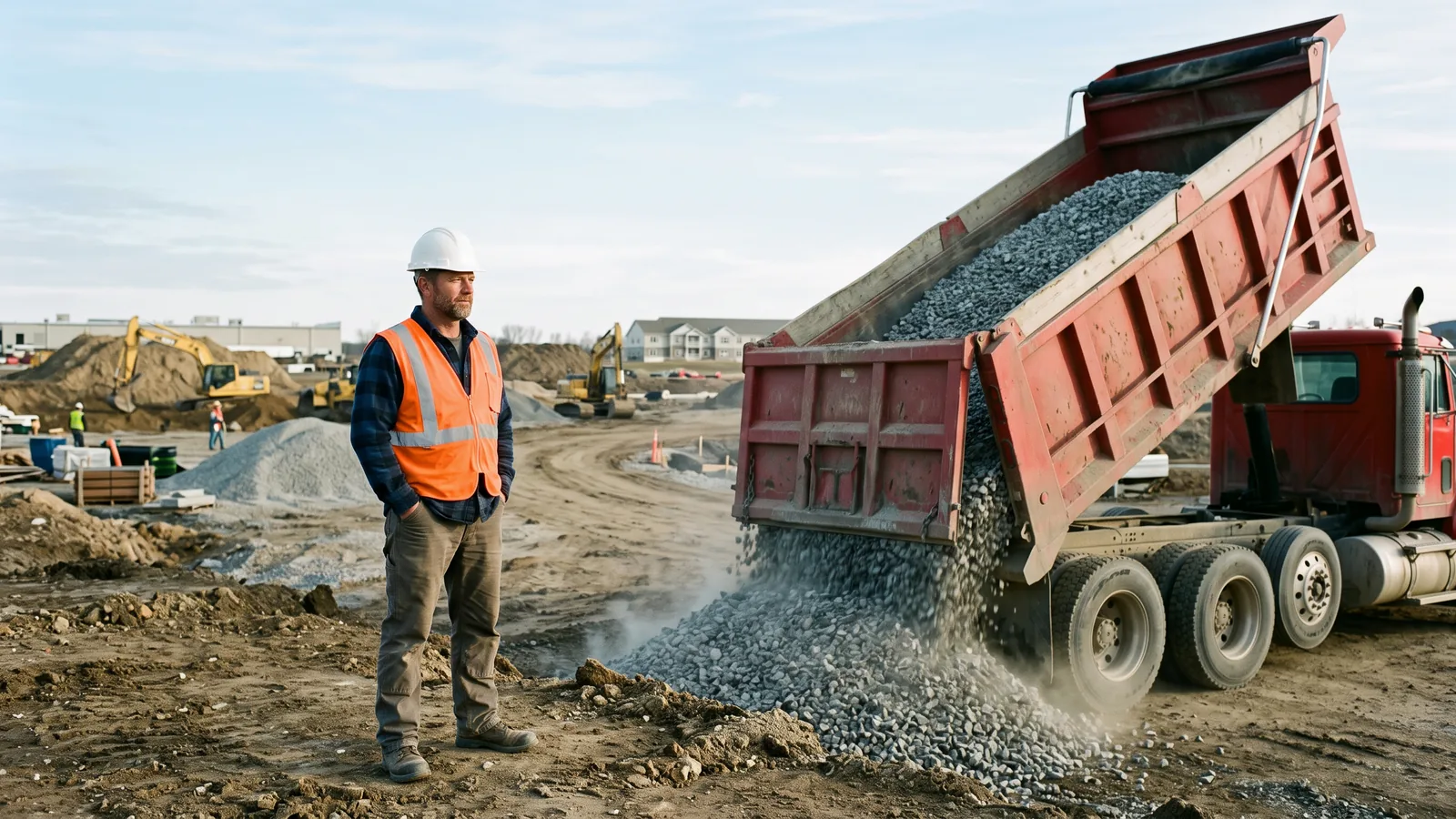
Dump truck financing pays for a tandem, tri-axle or single-axle dump truck, usually through a loan secured by the truck or through a lease. Contractors in excavation, landscaping and demolition use it, and so do independent haulers of sand, gravel and stone.
A loan makes you the owner from day one, with the lender's lien on the title until the last payment. Some providers offer a lease instead of a loan. A lease is not a loan; ownership, tax treatment and end-of-term obligations depend on the lease type and the specific contract. Consult a tax advisor.
Commera is a broker, not a lender. We compare offers from our lender partners. A dump truck is one part of a wider equipment financing plan, and the same rules on collateral, terms and down payments apply.
Who finances dump trucks, and what do they publish?
Dump trucks are financed by three kinds of providers: dealers and manufacturer finance arms, banks, and independent equipment lenders. Few of them publish dump truck rules in detail, but the ones that do show what a lender looks at first.
Dealers and captive lenders. A truck dealer may arrange financing at the point of sale. It is convenient, but you see one offer, tied to one truck on one lot.
Banks. A bank may finance a dump truck for an existing customer with a long track record. Expect it to ask for your financial statements.
Independent equipment lenders. These lenders focus on equipment and vehicles, and some of them state their rules openly on their websites.
Crest Capital is one example. On its vehicle financing page, Crest lists "service and utility vehicles such as dump trucks, garbage trucks, tow trucks". The same page states "No Age Restrictions on Used Trucks". It also says: "We can defer payments until the conversion is complete … Great for dump trucks."
Crest also publishes a floor. Its credit page names "2 or more years under current ownership" and calls a personal credit score of 650 or better "the benchmark". These are one lender's published rules, not a market norm. The same vehicle page excludes "trucks for owner operators", so an independent hauler should check fit first.
Industry approval odds are fairly high. According to the ELFA CapEx Finance Index for September 2026, the average approval rate was 77.7%. The small ticket approval rate was 80.0%, per the same ELFA report.
Worked example: standard or seasonal payments on a $150,000 dump truck
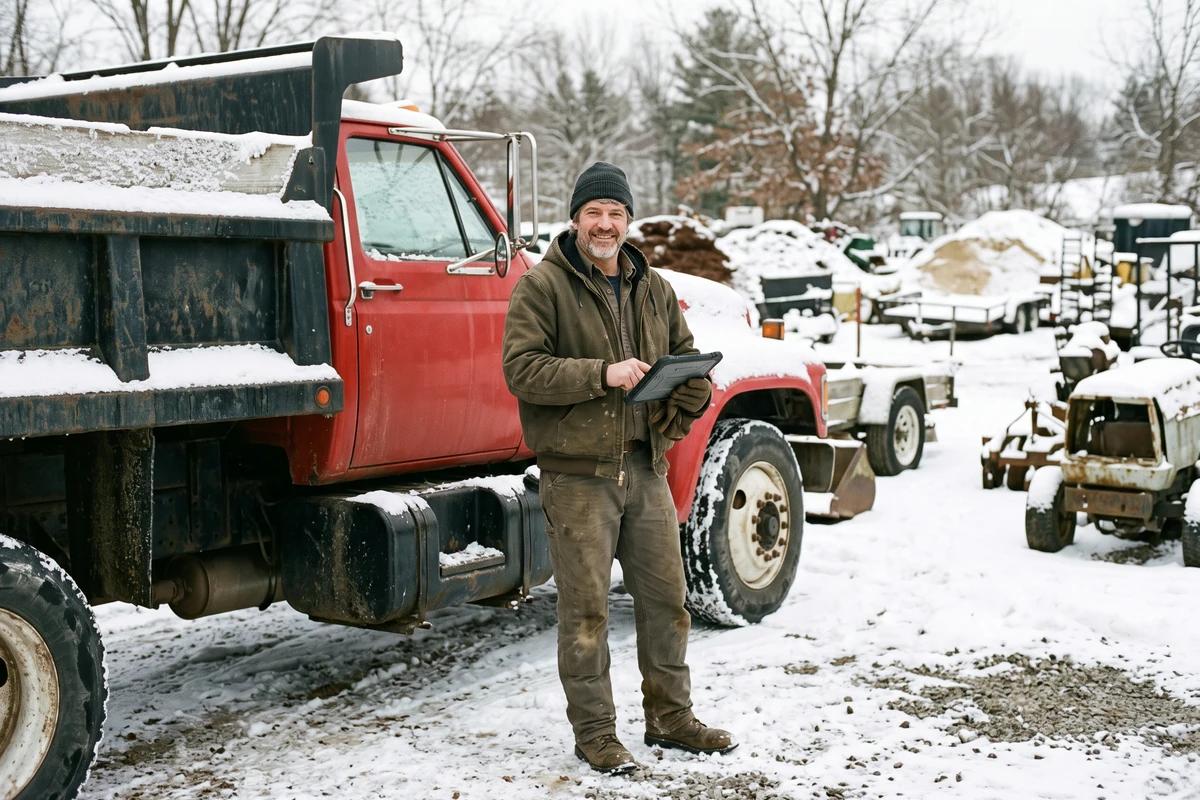
In a Commera illustrative calculation, a seasonal schedule cuts 15 payments in the slow months. Each remaining payment is $918.41 higher, and you repay $2,192.10 more in total. Interest keeps running during the months when you pay nothing.
Methodology: Commera illustrative calculation with assumed figures. It is not an offer, a quote or a real deal. A used dump truck costs $150,000, and you put down $30,000, or 20%.
In this illustrative case, you finance $120,000 at an assumed 11.00% rate for 60 months, with level payments in each schedule. A $495 fee is paid in cash at closing. Terms are subject to underwriting.
The seasonal schedule is hypothetical and applies only if a lender offers one. In this case the loan closes in December, and no payments fall due from January to March in any year. The rate stays the same, and interest accrues during each pause.
| Item | Standard | Seasonal |
|---|---|---|
| Months without payments | None | January to March |
| Loan amount, $ | 120,000 | 120,000 |
| Rate, % | 11.00 | 11.00 |
| Term, months | 60 | 60 |
| Payments | 60 | 45 |
| Monthly payment, $ | 2,609.09 | 3,527.50 |
| Total repayment, $ | 156,545.40 | 158,737.50 |
| Est. APR, % | 11.18 | 11.17 |
| Cash at closing, $ | 30,495 | 30,495 |
In this illustrative calculation, est. APR is an IRR on monthly cash flows. Month 0 is the loan amount less the $495 fee, and each later month is the payment due, or zero during a pause. The assumed rate is not the APR, because the fee raises the cost.
Est. APR barely moves between the two schedules, because the rate is the same and only the timing of the payments changes.
So the choice is about cash flow, not price. A seasonal schedule fits a business whose work stops in winter, when frozen ground halts digging and paving. It costs more in dollars, and each payment in the working months is larger.
If a lender does offer a seasonal schedule, ask three things in writing. Which months are skipped, whether interest accrues during the pause, and whether the skipped months move if your season starts late. Before you ask for one, estimate the payment against your own revenue by month.
Worked example: what changes at 26,001 and 55,000 pounds
A dump truck's weight decides two costs that come with it: a driver with a commercial license and a yearly federal tax return. Both turn on a weight measure, not on the price of the truck, so check them before you pick one.
Methodology: three hypothetical single-unit dump trucks with no trailer, sorted by weight. The rules come from 49 CFR 383.91 and the IRS instructions for Form 2290. The table shows which rule applies, not a tax amount.
| Truck | Weight measure | CDL rule | Federal heavy vehicle use tax |
|---|---|---|---|
| Light dump truck | GVWR under 26,001 lb | Not a Group B vehicle | Check the taxable gross weight |
| Heavy dump truck, light customary load | GVWR of 26,001 lb or more | Group B CDL | Check the taxable gross weight |
| Heavy tandem or tri-axle, fully loaded | Taxable gross weight of 55,000 lb or more | Group B CDL | Taxable: file Form 2290 |
Step 1: read the GVWR. Under 49 CFR 383.91(a)(2), a Heavy Straight Vehicle is a Group B vehicle. A driver needs a CDL for that group to operate the truck. Below the line, a CDL can still apply in Group C cases, such as hauling hazardous materials.
Step 2: work out the taxable gross weight. Per the IRS instructions for Form 2290, highway motor vehicles at or above the threshold are taxable. Taxable gross weight is not the GVWR. Per the same instructions, it adds the truck's unloaded weight, fully equipped with its body, to the heaviest load it customarily carries.
Step 3: put both into the budget. A Group B truck needs a licensed driver, which narrows who you can hire and can raise what you pay. Per the IRS instructions, a taxable truck needs a Form 2290 filing for each tax period, so ask a tax advisor for the amount before you set your rates.
Used dump truck financing: what lenders check
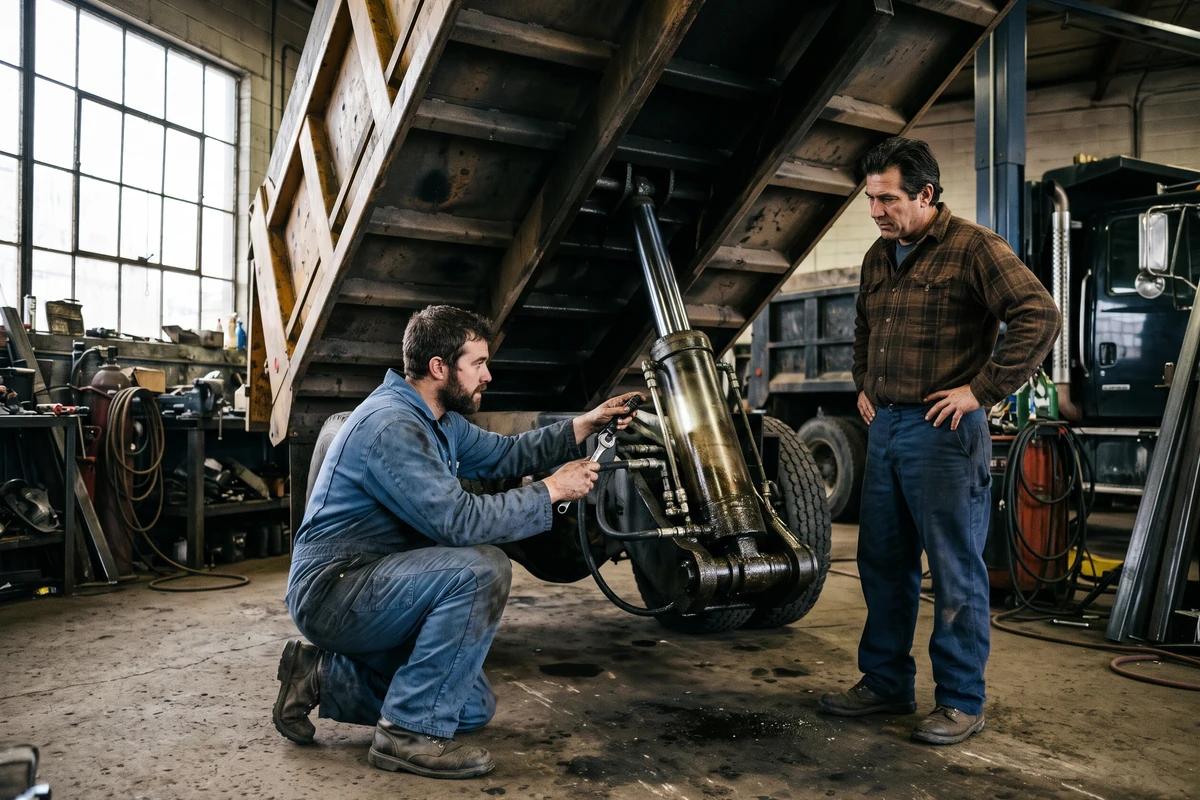
Used dump truck financing turns on the truck's condition as much as on your credit. The truck is the collateral, so the lender wants to know what it is worth and how long it will last. An older truck usually gets a shorter term.
Crest Capital publishes no age limit on used trucks, but that is one lender's policy. Other lenders may cap the age or the mileage, so ask before you shop.
| What lenders check on a used dump truck | Why it matters |
|---|---|
| Age and mileage | Set the term the lender will offer and the truck's resale value |
| Dump body condition | Worn floors, sides and tailgates mean early repair bills |
| Hoist and hydraulics | A failed cylinder or pump stops the truck from working |
| Frame and suspension | Cracks and repairs lower the truck's value as collateral |
| Maintenance records | Show the truck was serviced and help support its value |
| Clear title | The lender needs its lien to be the only one on the truck |
The title check matters most on a private sale. A seller who still owes on the truck may have a UCC lien or a lien on the title. The old lender must release it before your lender takes its place.
Get an independent inspection on any used truck you plan to finance. Ask for the report in writing. A report on the body, hoist and frame helps you negotiate the price, and it helps the lender judge the collateral too.
How to prepare a dump truck loan file
A dump truck loan file proves two things: that your business can make the payment, and that the truck is worth the loan. Prepare it before you find the truck, and the review goes faster once you have a deal.
- Recent bank statements. They show the cash flow behind the payment.
- Contracts and subcontracts. Signed work, such as a hauling subcontract with a general contractor, shows the lender where the revenue comes from.
- Time in business. Have your formation documents and tax returns ready.
- Credit. Know your personal and business scores before the lender pulls them.
- Truck details. Bring the spec sheet, VIN, mileage, photos and the seller's invoice.
- Insurance. Get a quote early, and ask the lender what coverage it requires.
A site crew often needs more than a truck to haul with. Our guide to landscaping equipment financing covers the machines that work beside a dump truck. When the file is ready, compare dump truck financing offers from several providers on the same terms.
Broker disclosure: Commera Finance is a broker, not a direct lender. Financing providers make their own eligibility, underwriting, approval, pricing, and term decisions.
Sources