
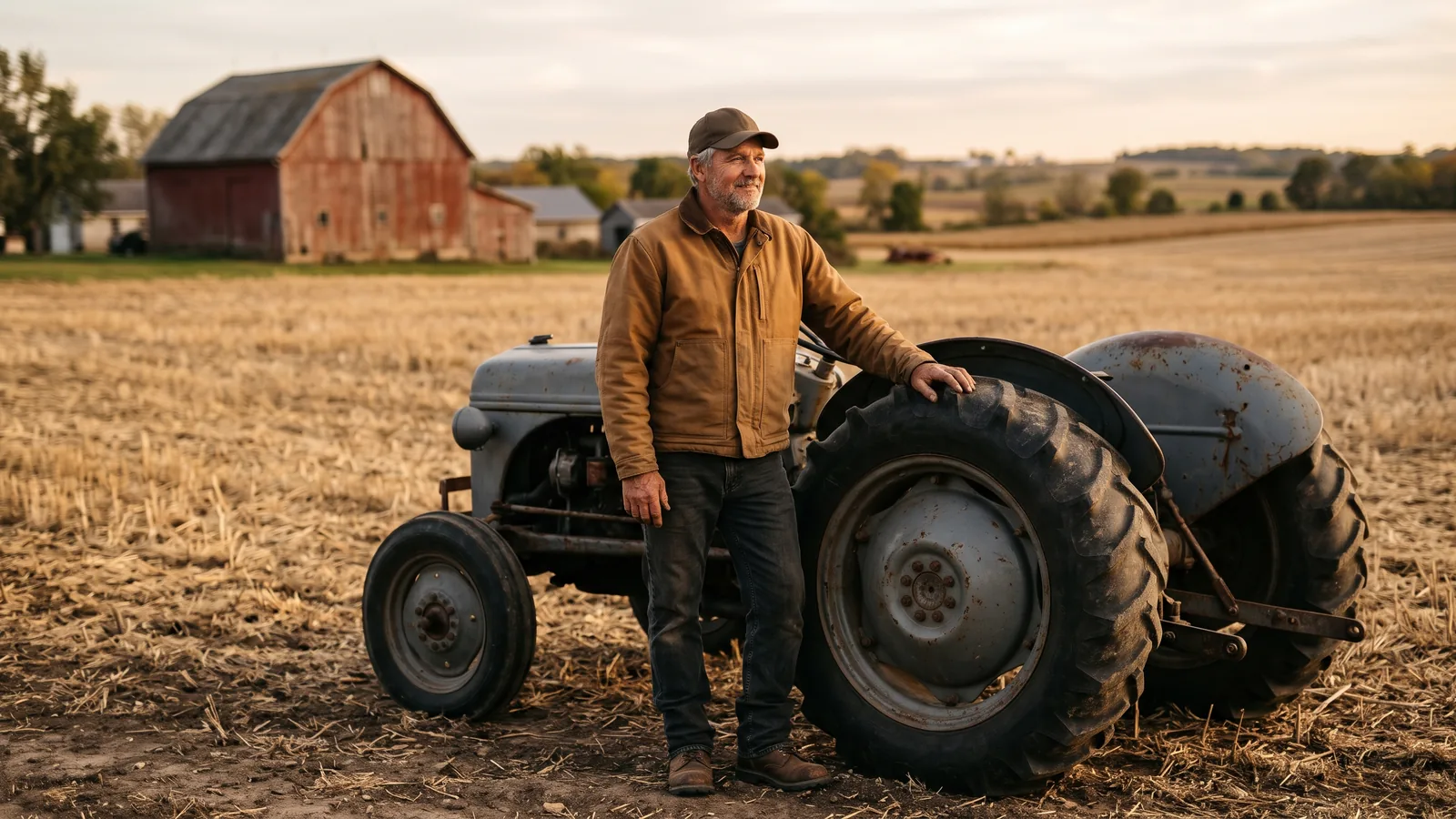
What is farm equipment financing?
Farm equipment financing is a loan or lease that spreads the cost of a tractor, combine or other farm machine over time, usually secured by the machine itself. The money can come from a bank, the Farm Credit System, the USDA Farm Service Agency (FSA) or an equipment lender.
The main difference from other equipment deals is the calendar. A farm earns most of its cash at harvest or at sale time, not in even monthly slices, so the payment schedule matters as much as the rate.
Agricultural equipment financing follows the same mechanics as any machine loan. The lender holds a lien on the machine, you make scheduled payments, and the lien is released at payoff. For the general mechanics, see how equipment financing works.
Commera is a broker, not a lender. We compare offers from our lender partners. This guide covers where farm loans come from, how FSA fits in and what a seasonal schedule costs.
Where do farm equipment loans come from?
Farm equipment loans come from four main sources: commercial banks and equipment lenders, the Farm Credit System, FSA direct loans and FSA-backed loans made by commercial lenders. Each sets its rate differently.
| Source | Who it serves | Rate set by | Notes |
|---|---|---|---|
| Commercial bank or equipment lender | Businesses that meet the lender's own credit policy | The loan agreement | Terms vary by lender and by machine |
| Farm Credit System | Farmers, ranchers, rural cooperatives and other eligible borrowers | Each institution | 4 banks and 55 associations, organized as cooperatives |
| FSA Direct Operating loan | Family farmers and ranchers who cannot get credit elsewhere at reasonable rates and terms | FSA | Up to $400,000 |
| FSA-backed operating loan | The same borrowers, through a commercial lender | Lender and borrower, within FSA maximum rates | Up to $2,558,000, adjusted annually for inflation |
Sources: FCA, About banks and associations, USDA FSA, Farm Operating Loans and USDA FSA, Current FSA Loan Interest Rates, as of November 8, 2026.
The four Farm Credit banks raise money in the markets and lend it to the associations, which lend to farmers, per the FCA.
Dealers and manufacturers also run their own financing programs, so read their terms as one more offer, not as the default.
Who can use FSA operating loans for equipment?
FSA operating loans can pay for farm equipment, along with livestock, poultry, feed, seed, fuel and other operating costs, per USDA FSA. The borrower must be a family farmer or rancher who meets the FSA criteria.
Per the same FSA page, eligible applicants are U.S. citizens, non-citizen nationals or qualified aliens. They must show a satisfactory credit history and the ability to repay.
There is one more test, and it matters most. The applicant must be unable to get credit elsewhere at reasonable rates and terms. That makes FSA a fallback, not a price you can shop for.
Repayment terms typically run from one to seven years, depending on the loan purpose, per FSA. You apply through your local FSA office with financial and production information and a farm business plan.
The rate is public: the FSA Direct Operating rate is 5.625%, effective November 1, 2026, per the FSA rates page. Check it again on the day you apply.
On FSA-backed loans, the lender and borrower negotiate the rate. Per the same FSA rates page, it may not exceed the prior business day's SOFR plus 6.75% for rates fixed under 5 years. For rates fixed 5 years or more, the cap is the 5-year Treasury note rate plus 5.5%.
Worked example: one tractor on monthly and annual payments
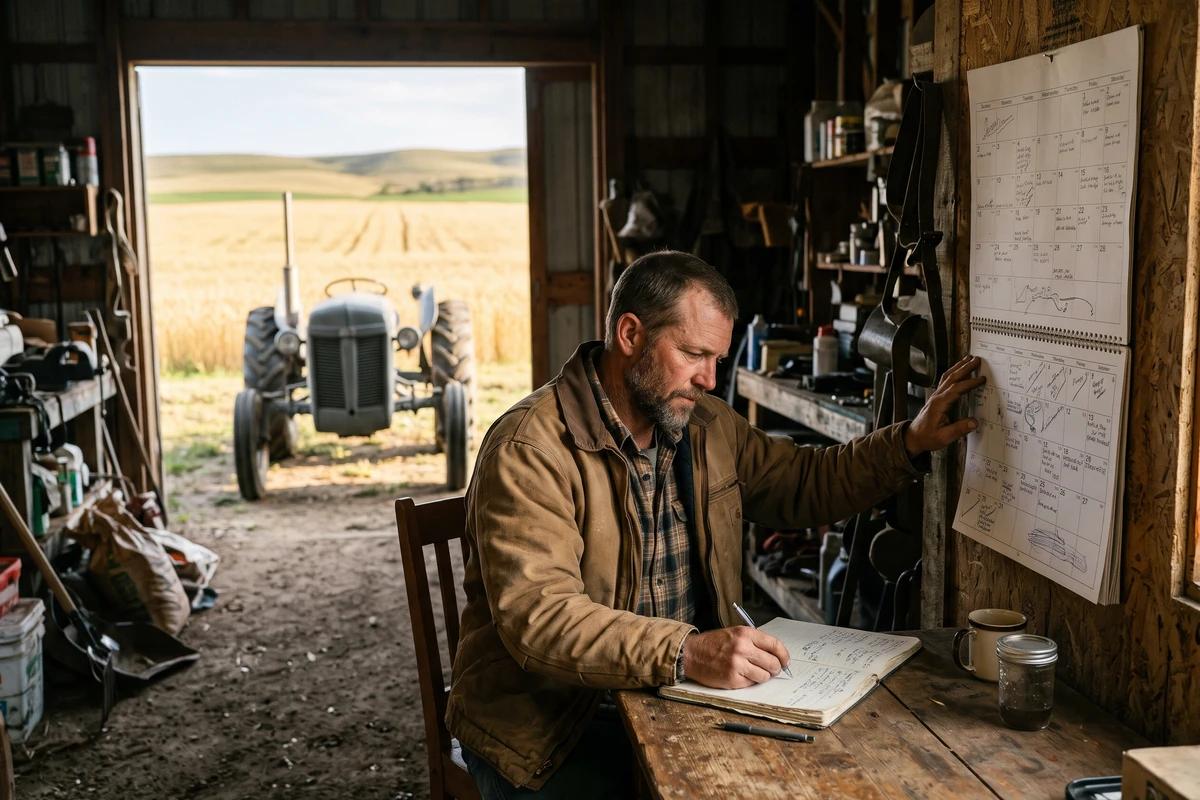
An annual schedule lets you pay a tractor loan from harvest cash, but it costs more interest. In this Commera illustrative calculation, the annual schedule adds $5,140.60 of interest on the same loan.
Methodology: Illustrative calculation with assumed figures, not an offer and not a real deal: a $180,000 tractor, 20% down ($36,000) and $144,000 financed at an assumed 8.00% fixed rate for 5 years with level payments. A $500 documentation fee is withheld from the loan proceeds, so you receive $143,500. Est. APR is the internal rate of return of the $143,500 against the payments, using the monthly rate times 12 for the monthly schedule and the annual rate for the annual one.
| Term | Monthly schedule | Annual schedule (after harvest) |
|---|---|---|
| Amount financed, $ | 144,000 | 144,000 |
| Rate, % | 8.00 | 8.00 |
| Term, years | 5 | 5 |
| Number of payments | 60 monthly | 5 annual |
| Payment, $ | 2,919.80 | 36,065.73 |
| Total repayment, $ | 175,188.05 | 180,328.65 |
| Interest, $ | 31,188.05 | 36,328.65 |
| Est. APR, % | 8.15 | 8.13 |
Commera illustrative calculation. Terms are subject to underwriting.
Why does the annual schedule cost more? Under it, you hold the full balance for a year before the first payment, while on the monthly schedule the balance starts falling after month one.
The rate is not the APR, because the fee lifts the est. APR above the rate on both schedules. The two APRs use different periods, so compare the schedules by total repayment.
The extra interest buys a better fit. A payment that lands after harvest does not draw on the operating line in spring. If the monthly schedule would force you to borrow for the payment, the cheaper loan stops being cheaper.
The down payment changes every number here. For how lenders set it, read our guide to the equipment down payment.
Worked example: FSA direct rate vs. a commercial rate
On the same $144,000 over 7 years, the FSA Direct Operating rate saves $2,205.76 a year against an assumed commercial rate. Over the term, that is $15,440.30 in this Commera illustrative calculation.
Methodology: Illustrative calculation with assumed figures, not an offer and not a real deal: $144,000 financed for 7 years with annual payments and no fees. The FSA column uses the November 2026 Direct Operating rate from the FSA rates page, and the commercial rate of 8.00% is an assumption. With no fees, est. APR equals the rate.
| Term | FSA direct operating | Commercial loan |
|---|---|---|
| Amount, $ | 144,000 | 144,000 |
| Rate, % | 5.625 | 8.00 |
| Term, years | 7 | 7 |
| Annual payment, $ | 25,452.67 | 27,658.43 |
| Total repayment, $ | 178,168.68 | 193,608.98 |
| Est. APR, % | 5.625 | 8.00 |
Commera illustrative calculation. Terms are subject to underwriting.
The gap is real money, but it is not a choice open to everyone.
FSA lends only when you cannot get credit elsewhere at reasonable rates and terms. A farm with a strong bank relationship may not meet that test. A newer operation without one may.
Read the comparison the other way, too. If a commercial quote sits far above what the FSA program would charge, ask the lender why. Then compare it with other equipment financing options before you sign.
What should you check before you sign?
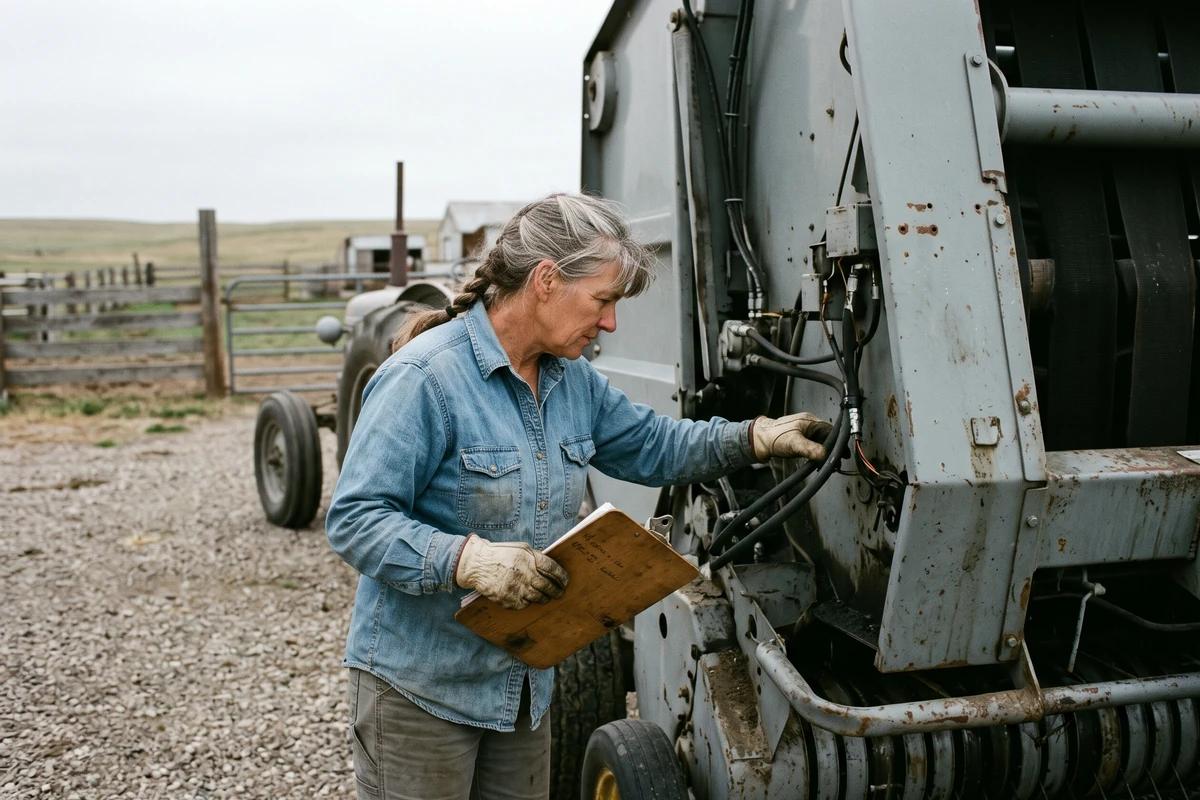
Check five things before you sign: the payment calendar, the machine's useful life, the collateral, the prepayment terms and the alternatives. A farm machine loan runs for years, and each of these can cost more than a rate difference.
Match the schedule to cash. Ask for annual or semiannual payments if your income is seasonal. Put the due date after the crop or livestock sale, not before it.
Compare life and term. The machine should outlast the loan with value to spare. A used machine on a long term can end up worth less than its balance.
Read the lien. Expect a UCC lien on the machine, and ask whether it also covers other farm assets. Know which one you are signing.
Ask about early payoff. A good harvest tempts you to pay down the loan, so find out whether a prepayment penalty applies.
Consider a lease. A lease changes ownership and the end-of-term terms. A TRAC lease is one structure lenders offer for working equipment.
Tax treatment also shapes the real cost. A purchase may qualify for the Section 179 deduction. Consult a tax advisor before you count on it.
Example: before you sign for a farm machine
- Set the payment date. Write the month your main crop or livestock income arrives, and ask for the first payment after it.
- Line up total repayment. Compare amount, rate, term, payment, total repayment and est. APR on every offer, not only the rate.
- Check the FSA test. Ask whether you would meet the FSA rule on credit elsewhere before you plan around its rate.
- Match life to term. Confirm the machine's expected working life runs past the last payment, especially on used equipment.
- Read the lien and payoff terms. Find out what the lender files a lien on, and what early payoff costs.
When your numbers are ready, check your funding options with a short form and no hard credit pull.
Broker disclosure: Commera Finance is a broker, not a direct lender. Financing providers make their own eligibility, underwriting, approval, pricing, and term decisions.
Sources